What is CRM? Off-the-shelf CRM or custom CRM software?
What is CRM?
CRM (Customer Relationship Management) is software in which a business keeps all information and interactions with its customers and prospects in one place. Who got in touch, when and through which channel; which quote was sent; what stage the deal is at; which request is still open? A CRM makes the answers shared across teams.
A typical CRM includes:
- customer and company records with contact history
- sales opportunities and quote stages (the sales pipeline)
- tasks, reminders and appointments
- support requests and resolution workflows
- integration with e-mail, phone and messaging channels
- reporting and management dashboards
How is CRM different from ERP?
CRM manages customer-facing processes such as sales, marketing and support. ERP (Enterprise Resource Planning) manages internal resources: stock, purchasing, production, accounting and HR. In practice the two are linked: a deal closed in the CRM becomes an invoice, a stock movement and a payment in the ERP. For many businesses the real question is getting both to work together without copying data by hand.
Off-the-shelf CRM or custom CRM software?
Products such as HubSpot, Zoho, Pipedrive or Odoo get you started quickly and are often enough for standard sales processes. Custom CRM software makes sense when your workflow does not fit the standard mould. Questions to consider:
| Criterion | Off-the-shelf fits better | Custom fits better |
|---|---|---|
| Process | Standard sales pipeline | Industry-specific steps (bookings, transfers, field work, commissions) |
| Integration | Ready-made connectors are enough | Deep integration with your existing systems is needed |
| Users and cost | Few users, short term | Many users; long-term licence cost is decisive |
| Data | The product’s data model is enough | You need your own data model and reports |
| Mobile and field | The standard mobile app is enough | Field-specific mobile flows are needed |
There is a middle path too: use an off-the-shelf CRM as the core and build the missing industry modules and integrations on top.
An example of an industry-specific CRM
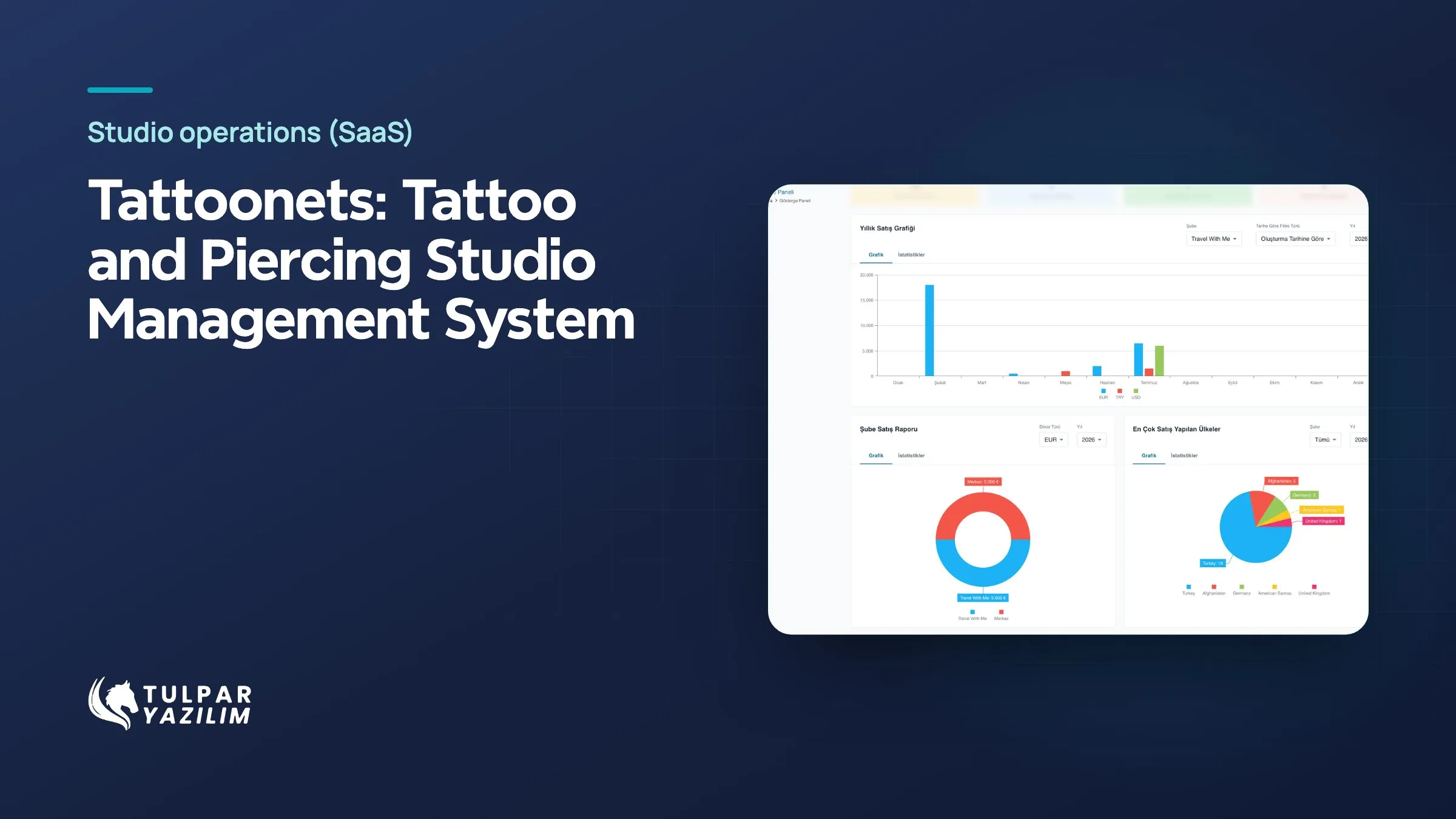
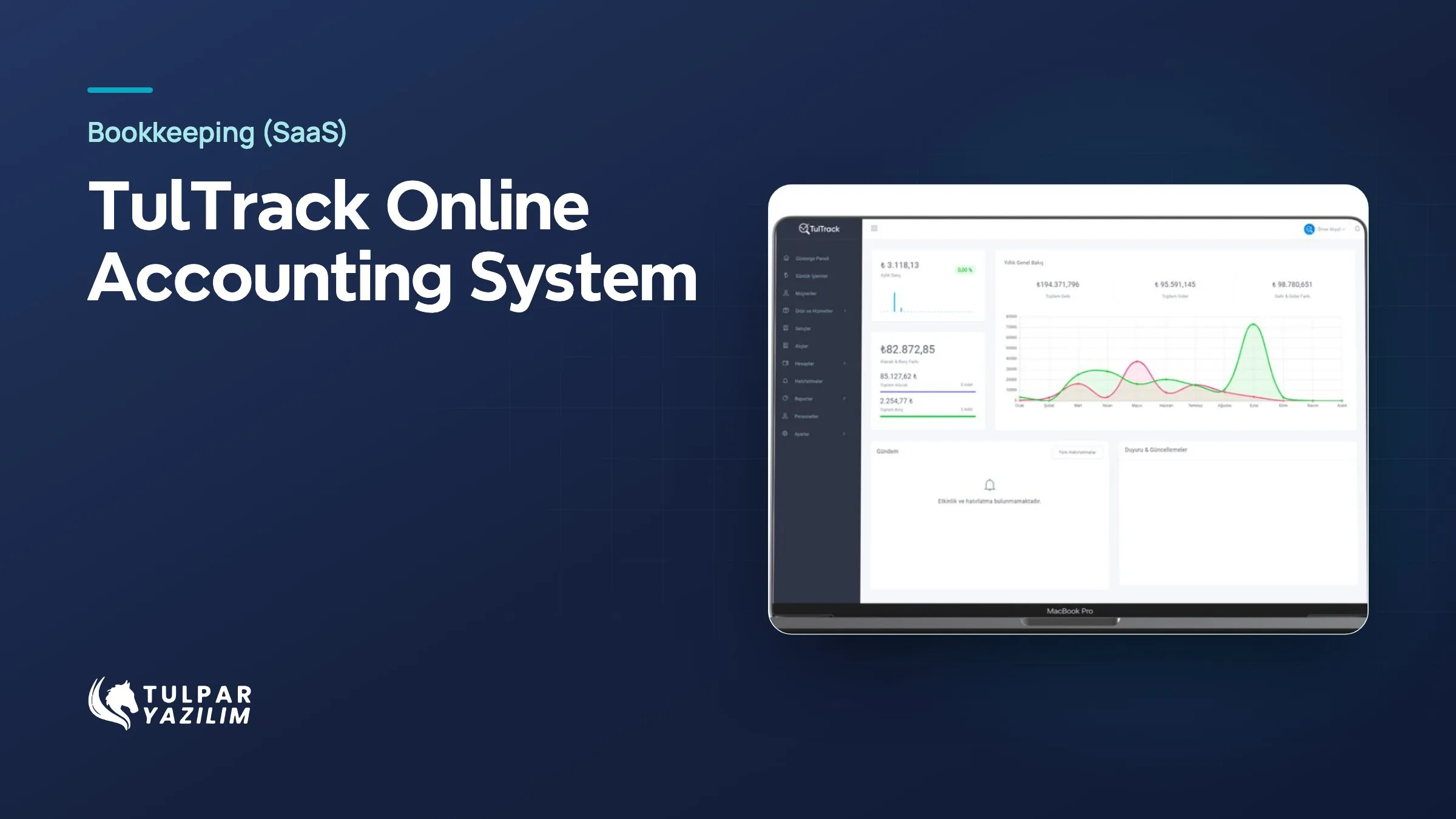
Tattoonets, built by Tulpar, is an operations and customer management system for tattoo and piercing studios. Customer records and online booking, artist and driver notifications, transfers, deposits, commissions and the cash register all run in one flow. Because these steps do not fit a standard sales pipeline, an industry-specific structure was the better choice. In TulTrack, customer and supplier accounts, invoicing, e-invoicing and stock were handled together.
Where to start
First map where customer information lives today and at which step it gets lost. Then test how much of that flow an off-the-shelf product covers. If the gap is small, a ready product plus integrations is enough; if it sits at the heart of your business, custom software is usually the sounder investment.